
|
⏱️ Estimated time to read:
How to start investing in easy steps begins with making your money work for you. This beginner investing guide shows how to set goals, manage risk, and build a strong foundation before buying assets. You will discover easy ways to invest money, from savings accounts and certificate of deposit (CDs) to stocks, bonds, and property. Investing for beginners steps include balancing growth and income assets, choosing between active or passive strategies, and using compounding to grow wealth steadily over time.
Quick Navigation
- Step 1: Set Goals and Know Your Risk
- Step 2: Build an Emergency Fund and Pay Off Debt
- Step 3: Choose Active or Passive Investing
- Step 4: Decide How Much to Invest Regularly
- Step 5: Find the Right Mix of Investments
- Step 6: Understand Investing vs Speculating
- Step 7: Track Your Portfolio and Stay Consistent
- Conclusion: Start Small and Stay Focused
- FAQ: How to Start Investing in Easy Steps
- Recent Articles On Investing Topics
- Explore More Investing Resources And Tools
Step 1: Set Goals and Know Your Risk
Beginner Investing Guide to Goals
Every investor needs clear goals, and therefore it is important to define your purpose early. As a result, the type of assets you choose will reflect those goals. For example, short term goals may focus on saving for education or a major purchase. In contrast, long term goals often aim at building wealth or reaching financial freedom. Consequently, when you know why you are investing, you can match your strategy to your timeline.
Short Term vs Long Term Options
Short term investing usually means you need access to your money within one to three years. In this case, lower‑risk choices such as CDs or savings accounts may be safer. Meanwhile, medium term goals, often under ten years, can include bonds or index funds. On the other hand, long term investing, over ten years, allows you to ride out market ups and downs. Therefore, shares or growth funds may bring higher returns with time.
Easy Ways to Invest Money Safely
Easy ways to invest money safely include using defensive assets when you need stability. In this guide, safely means choosing options with lower risk compared to shares or property, while still accepting that every investment carries some level of risk. For instance, savings accounts and CDs protect your capital while offering modest returns. In addition, bonds provide steady income with lower risk. As a result, these options help you preserve funds for short term needs while still participating in investing.
You can estimate your returns with our CD calculator to see how compounding works in practice.
Step 2: Build an Emergency Fund and Pay Off Debt
Why an Emergency Fund Matters
Before you begin investing, it is important to prepare. An emergency fund gives you security and therefore protects your investments. For example, unexpected expenses such as car repairs or medical bills can appear at any time. As a result, having about six months of living costs set aside means you will not be forced to sell assets. In this way, you can follow investing for beginners steps without interruptions, moving forward step by step with confidence
Paying Off High‑Interest Debt First
In addition, paying off high‑interest debt is essential before you invest. Debt with high rates can quickly reduce the benefits of compounding. Consequently, clearing these balances first allows your money to grow without being held back. This beginner investing guide highlights that reducing debt is one of the easy ways to invest money safely. Once debt is under control, you can focus on building wealth through savings accounts, CDs, bonds, or other investments.
Step 3: Choose Active or Passive Investing
Active Investor Explained
Some investors prefer to take control. As a result, they choose an active approach. This means researching companies, analyzing stocks, and tracking performance closely. For example, an active investor may buy and sell shares often, hoping to achieve higher returns. However, this strategy requires time, knowledge, and a willingness to accept greater risk.
Passive Investor Options (Exchange-traded funds and Mutual Funds)
On the other hand, many beginners prefer passive investing. This beginner investing guide highlights that passive strategies are simpler and involve less risk. For instance, you can invest in exchange-traded funds (ETFs) or mutual funds, which spread your money across many assets. In addition, you may hire an advisor to manage your portfolio. Easy ways to invest money safely often include passive options because they provide diversification without constant monitoring.
Investing for Beginners Step by Step
When you compare active and passive investing, you see two different paths. Therefore, beginners should decide how much time they want to spend on research. If you enjoy analyzing markets, active investing may suit you. If you prefer a hands‑off approach, passive investing may be better. In either case, investing for beginners step by step means starting small, learning as you go, and building confidence over time.
Step 4: Decide How Much to Invest Regularly
Setting Your Investment Amount
Once you have clear goals, the next step is deciding how much to invest. Therefore, it helps to set a realistic amount that fits your budget. For example, you may start small and then increase contributions as your income grows. As a result, you create a habit that supports long‑term wealth building.
Power of Compounding Over Time
In addition, regular investing allows you to benefit from compounding. Compounding means your returns generate more returns over time. The U.S. SEC explains compounding as one of the most powerful forces in investing. Consequently, the longer your money stays invested, the greater the growth potential. This beginner investing guide shows that compounding is one of the easy ways to invest money safely while still aiming for higher returns.

Dollar Cost Averaging Benefits
Another strategy is dollar cost averaging. With this approach, you invest a fixed amount at regular intervals. As a result, you buy fewer units when prices are high and more units when prices are low. Over time, this smooths out market ups and downs. Therefore, investing for beginners steps often includes dollar cost averaging as a simple way to build confidence.
Step 5: Find the Right Mix of Investments
Growth Assets vs Income Assets
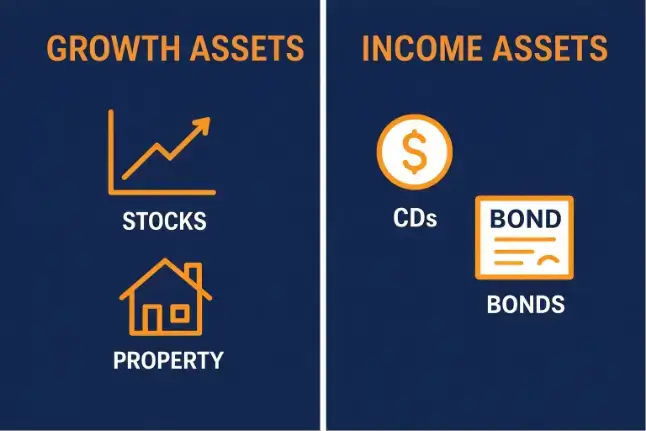
When you think about how to start investing in easy steps, one key decision is choosing between growth and income assets. Growth assets, such as shares or rental property, can rise in value over time. As a result, they may deliver higher returns but also bring more ups and downs. In contrast, income assets, such as bonds, CDs, or savings accounts, provide steady payments with lower risk. Therefore, balancing these two types of assets helps you match your portfolio to your goals.
Easy Ways to Diversify Your Portfolio
Diversification is one of the easy ways to invest money more safely. For example, you can spread your funds across bonds, shares, property, CDs, and even alternative investments. In this way, you reduce the chance of losing money in one area. Consequently, diversification smooths out market ups and downs and gives your portfolio more stability. This beginner investing guide shows that diversification is a simple but powerful step for long‑term success.
Beginner Investing Guide to Asset Allocation
Asset allocation means deciding how much of your money goes into each type of investment. For instance, a younger investor may choose more growth assets, while someone nearing retirement may prefer more income assets. As a result, your mix reflects your risk tolerance and time frame. Investing for beginners steps often starts with a simple allocation, then adjusts over time as goals change. Therefore, learning asset allocation is central to how to start investing in easy steps.
Step 6: Understand Investing vs Speculating
What Investing Really Means
When you think about how to start investing in easy steps, it is important to know what investing truly means. Investing involves buying assets that can generate income or grow in value over time. For example, when you invest in a company, you expect future earnings to support the value of your shares. As a result, investing is based on fundamentals and long‑term growth. This beginner investing guide shows that investing is about building wealth steadily rather than chasing quick gains.
Why Speculating Is Different
In contrast, speculating is more like placing a bet. You buy an asset hoping someone else will pay more for it later. Consequently, speculation depends on price movements rather than income or earnings. For instance, buying a stock only because you expect it to rise quickly is speculation. Easy ways to invest money safely avoid speculation because the risks are higher and the outcomes less predictable. Therefore, investing for beginners step by step means focusing on assets with real value, not short‑term bets.
The U.S. Treasury provides safer alternatives such as government bonds.
Step 7: Track Your Portfolio and Stay Consistent
Monitoring Performance Over Time
Once you begin, it is important to keep track of your portfolio. As a result, you can see how your assets perform and make adjustments when needed. For example, reviewing your investments regularly helps you stay aligned with your goals. Therefore, monitoring performance is part of how to start investing in easy steps.
Regular Contributions and Compounding
In addition, adding money regularly strengthens your portfolio. Compounding works best when you stay invested over time. Consequently, even small contributions can grow into larger amounts. This beginner investing guide shows that consistency is one of the easy ways to invest money safely while still building wealth.
Avoiding Market Timing Mistakes
On the other hand, trying to time the market often leads to poor results. For instance, buying and selling too often can reduce returns. Instead, investing for beginners steps emphasize staying focused on long‑term growth. Therefore, dollar cost averaging and patience give your portfolio the best chance to grow steadily.
Conclusion: Start Small and Stay Focused
How to start investing in easy steps is about building confidence one decision at a time. First, set clear goals and understand your risk tolerance. Then, prepare with an emergency fund and reduce debt before buying assets. As a result, you create a strong foundation for growth.
In addition, decide whether you prefer active or passive investing. Regular contributions and compounding will help your money grow steadily. Consequently, finding the right mix of growth and income assets gives balance to your portfolio.
This beginner investing guide shows that easy ways to invest money safely include diversification and patience. Investing for beginners steps include tracking your portfolio, staying consistent, and avoiding speculation. In practice, you build wealth step by step by letting time in the market work for you.
FAQ: How to Start Investing in Easy Steps
The first steps include setting clear goals, building an emergency fund, and paying off high‑interest debt. These actions create a strong foundation before you buy assets.
This is a beginner investing guide. It explains investing for beginners steps such as balancing growth and income assets, choosing active or passive strategies, and using compounding to grow wealth. Even advanced investors keep an eye on these fundamentals because they form the foundation of every successful portfolio.
Easy ways to invest money safely include savings accounts, CDs, government bonds, and diversified index funds. These options protect your capital while still allowing steady growth. In this guide, safely means choosing lower‑risk investments compared to shares or property, while remembering that no investment is completely risk‑free.
Active investing requires research and regular monitoring, while passive investing uses funds that spread risk automatically. Beginners often start with passive strategies because they are simpler and less time‑consuming.
Yes. Investing for beginners steps often include starting with small contributions. Regular deposits, even modest ones, benefit from compounding and grow steadily over time.
Recent Articles On Investing Topics
-

Investing Basics: Key Concepts and Types of Investments
Understanding investing basics and concepts helps you see how different…
-

Investor Personality Test: Find Your Investing Style
Take this Investor personality test to discover your investing style…
Explore More Investing Resources And Tools
Use calculators and downloadable tools, such as our ratio analysis spreadsheet to apply what you learn.
Investing – Tools to Download and Online Calculators
Investing – Recent and Most Read Articles and Guides
Disclaimer – Educational Use Only
Content on MoneyOpes.com is for informational and educational purposes only. It does not constitute financial, legal, or professional advice. Your financial situation is unique, and outcomes may differ. Past performance is not a guarantee of future results. MoneyOpes.com adheres to strict editorial integrity standards, and to the best of our knowledge, all content is accurate as of the date posted. See our full disclaimer.