
|
⏱️ Estimated time to read:
Choosing a stock broker is an important step in your investing journey. The right broker gives you access to the investments you want and the tools you rely on to make informed decisions. Because of this, it helps to look for a broker that fits your goals and the way you prefer to invest. For example, some people want a simple long term approach. Others prefer a platform that supports frequent trading. As a result, each style needs different features.
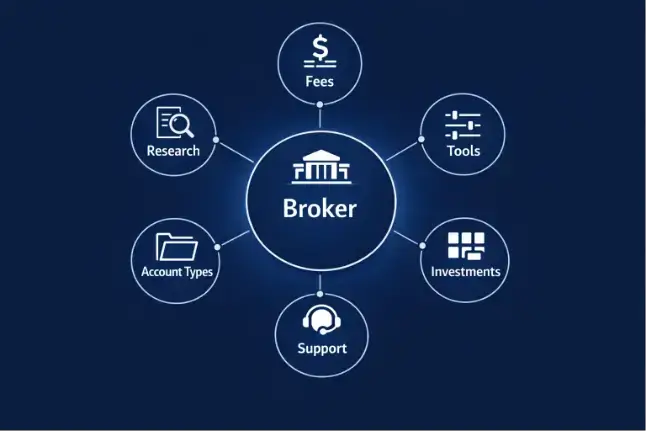
When you compare stock brokers, you look at more than fees. You also consider the platform, the research tools, and the support you receive. In addition, these features shape your experience and help you feel more confident as you invest. You may want a broker with a wide range of investment options. You may also want strong educational resources or a platform that feels easy to use from the start.
This guide explains what a stock broker does and how to choose one that fits your investing style. It also walks through the key features to compare so you can find a broker that supports your goals.
You can also read our guide on how to start investing to understand the first steps before choosing a stock broker.
Table of Contents
- What a Stock Broker Does
- Match the Broker to Your Investing Style and Goals
- Compare Stock Brokers by Costs and Fees
- Investment Options You Can Access Through a Broker
- Trading Platforms and Learning Resources — Minor Fixes
- Customer Support and Service Availability
- Safety, Security, and Regulatory Compliance
- Conclusion
- FAQ: Choosing a Stock Broker
- Recent Articles on Stocks
- Explore More Stocks and Investing Resources And Tools
What a Stock Broker Does
A stock broker gives you access to the financial markets. You use the broker’s platform to buy and sell investments. These may include stocks, exchange traded funds, bonds, or other products. In addition, the broker holds your account and keeps your investments safe.
Many brokers offer tools that help you research the market. You may see charts, news, analyst reports, and screeners. Some brokers also provide learning resources that help you understand how investing works. Because each broker offers different features, it helps to understand what you need before you open an account.
Match the Broker to Your Investing Style and Goals

Your goals shape the type of broker that works best for you. You may invest for retirement, or you may save for a home. Another goal may be to build long term wealth. Each goal needs different tools and account features. As a result, it helps to think about what you want to achieve before you choose a broker.
Your investing style also matters. Some people trade often, while others prefer to invest slowly over time. If you trade often, you may want a platform with fast order execution and strong research tools. On the other hand, long term investors may prefer simple features and a clear layout. In either case, the right broker should support the way you prefer to invest.
It also helps to understand the difference between a full service broker and a discount broker. A full service broker offers personalised advice, research, and support. A discount broker focuses on low fees and simple online trading. Many new investors choose a discount broker because it is easy to use and cost effective. This is why people often look for the best online broker for beginners when they start investing.
Your starting capital can also guide your choice. Some brokers allow small deposits, while others require a higher minimum balance. Because of this, it helps to check the account requirements before you sign up.
Full Service Broker vs Discount Broker

| Feature | Full Service Broker | Discount Broker |
|---|---|---|
| Support | Offers personalized advice and guidance | Provides basic support and self‑service tools |
| Research Tools | In‑depth reports, analyst insights, and tailored recommendations | Standard tools, simple charts, and easy‑to‑use features |
| Fees | Higher fees due to advice and managed services | Lower fees and often low‑cost trading |
| Platform | May include advanced tools and professional planning | Simple online platform designed for ease of use |
| Best For | Investors who want advice and can afford higher costs | Beginners and cost‑focused investors |
| Typical Use Case | Long term planning with professional input | Self‑directed investing and learning by doing |
Compare Stock Brokers by Costs and Fees
Costs can affect your returns. Because of this, it helps to understand the fees each broker charges. Some brokers charge a commission each time you trade. Others offer commission free trading but may charge other fees.
Common fees include:
- account fees
- withdrawal fees
- currency conversion fees
- fees for advanced tools or data
Low fees may suit active traders. Simple pricing may suit long term investors. In either case, it helps to look at the full fee structure so you know what to expect. This makes it easier to compare stock brokers and choose one that fits your budget.
Investment Options You Can Access Through a Broker
Each broker offers a different range of investments. Some focus on stocks and exchange traded funds. Others offer a wider range that includes bonds, fixed income products, options, and futures. You may also want access to international stocks. In addition, some brokers offer fractional shares, which allow you to buy a small part of a share.
The right choice depends on what you want to invest in. You may plan to build a simple long term portfolio, which only needs stocks and exchange traded funds. Another investor may want more advanced strategies and look for access to options or futures. A wide range of investment options gives you more flexibility as your goals change.
Trading Platforms and Learning Resources — Minor Fixes
Your experience with a broker depends on the platform you use each day. A good platform should feel easy to navigate. It should also give you the tools you need to make informed decisions. You may see charts, watchlists, alerts, and market news. In addition, some platforms offer mobile apps that help you stay connected to the market.
Learning resources can also help you grow your skills. Many brokers offer tutorials, articles, videos, and courses. These resources can guide you as you learn how to choose a stock broker or how to compare brokers. Strong learning support can be helpful for both new and experienced investors. As a result, it is worth checking the quality of the educational content before you open an account.
Customer Support and Service Availability
Good customer support can make a difference when you need help. Some brokers offer support by phone, email, or live chat. Others offer support only during certain hours. Because of this, it helps to look at the support options and the response times.
Fast support can be helpful if you trade often. Clear help articles may suit investors who prefer to solve issues on their own. In either case, a broker with strong support can give you more confidence as you invest.
Safety, Security, and Regulatory Compliance
Safety should always be a priority. A regulated broker must follow rules that protect your account and your investments. Regulation varies by country, so it helps to check which authority oversees the broker you choose.
Security features also matter. These may include two factor authentication, encryption, and secure account access. In addition, some brokers offer alerts that notify you of account activity. A safe and regulated broker gives you peace of mind as you invest.
Conclusion
Choosing a stock broker takes time, but the effort helps you find a platform that supports your goals and the way you prefer to invest. When you compare brokers, look at the fees, the platform features, the investment options, and the support you receive. A broker that fits your investing style can help you feel more confident as you build your long-term financial future.
FAQ: Choosing a Stock Broker
When choosing a stock broker, look at the fees, the platform, the investment options, and the support you receive. It also helps to check whether the broker is regulated and offers the tools you need for your investing style.
A full‑service broker offers personalised advice and higher support. A discount broker focuses on low fees and simple online trading. Most beginners choose a discount broker because it is affordable and easy to use.
Beginners often look for the best online broker for beginners by comparing fees, ease of use, and learning tools. A simple platform with clear guidance can help new investors feel more confident.
To compare stock brokers, look at the total fees, the range of investments, the platform features, and the support options. You can also compare brokers by reading independent reviews or checking trusted investor‑education resources such as Investor.gov, which offers clear guidance for beginners.
No. Many discount brokers allow small deposits or even fractional shares. This makes it easier to start investing with a small amount of money.
Online brokers are safe when they are regulated by a recognised financial authority. Look for security features such as two‑factor authentication, encryption, and account alerts.
Yes. You can transfer your investments to another broker. Some brokers charge a transfer fee, so it helps to check the costs before you move your account.
Recent Articles on Stocks
-

Assets That Rise During War and How to Access Them Through the Stock Market
Geopolitical conflict reshapes global markets. As a result, supply chains…
-

Investing in Stocks: A Beginner’s Guide to How Stocks Work
Investing in stocks is a common way to grow wealth…
-

How a USD Decline Could Affect US Stocks and International Markets
The value of the United States dollar influences trade, earnings,…
-

Ways to Value a Stock: Main Approaches, Value Investing, and a Coca‑Cola Case Study
Valuing a stock starts with a simple idea. You want…
-

Bottom -Up and Top-Down Approaches to Picking Stocks
Investors use different ways to study the stock market. Two…
-

Wide Moat Companies. How They Win Over Time and How to Spot Them
Wide moat companies often hold strong positions that last. This…
Explore More Stocks and Investing Resources And Tools
Use calculators and downloadable tools, such as our ratio analysis spreadsheet to apply what you learn.
Stocks – Tools to Download and Online Calculators
Disclaimer – Educational Use Only
Content on MoneyOpes.com is for informational and educational purposes only. It does not constitute financial, legal, or professional advice. Your financial situation is unique, and outcomes may differ. Past performance is not a guarantee of future results. MoneyOpes.com adheres to strict editorial integrity standards, and to the best of our knowledge, all content is accurate as of the date posted. See our full disclaimer.