
|
⏱️ Estimated time to read:
Investing in stocks is a common way to grow wealth over time. When you buy shares, you own part of a company and take part in its future growth. This ownership gives you a direct stake in the company’s earnings and long term performance.
Understanding stock market basics helps you see why prices move and how companies create value. As you learn how stocks work, you also gain a clearer view of the factors that shape investor decisions. These ideas form the foundation for the detailed topics covered in this guide.
Table of Contents
- What Investing in Stocks Means
- Stock Market Basics
- How Stocks Work in Practice
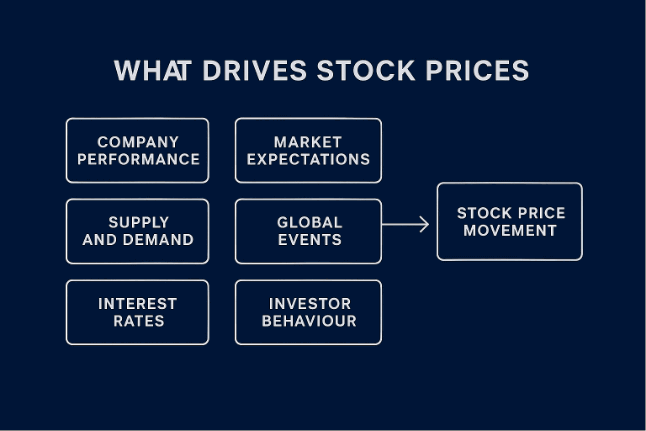
- Key Drivers of Stock Prices
- External Factors That Influence Stocks
- Ways Investors Evaluate Stocks
- Glossary – Investing in Stocks
- Conclusion
- FAQs Stock Market Basics
- Recent Articles on Stocks
- Explore More Stocks and Investing Resources And Tools
What Investing in Stocks Means
Ownership And Shares Explained
When you buy a share, you own part of a company. Each share represents a small piece of its assets, earnings, and future growth. This ownership gives you clear rights. You may receive dividends when the company shares profits. You may also benefit when the share price rises as the business grows.
Companies divide their ownership into units so investors can buy and sell them. As a result, people can take part in the success of businesses of many sizes. This structure also gives companies a practical way to raise money without taking on debt.
Why Companies Issue Stock
Companies issue stock because they need capital to grow. They use this money to expand operations, develop new products, hire staff, and enter new markets. In addition, raising funds through shares often gives companies more flexibility than borrowing. It avoids fixed repayments and spreads ownership across many investors.
Issuing stock also increases visibility. When a company lists on a stock exchange, it becomes more transparent. As a result, this transparency can attract long term investors who support the company’s plans and progress.
Why Investors Buy Shares
Investors buy shares for several reasons. Many want long term growth as companies increase profits and expand. Others look for income through dividends. Some investors buy shares to diversify their portfolios and spread risk across different industries.
Shares also offer liquidity. In other words, investors can buy or sell them quickly on the stock market. This flexibility appeals to people who want to build wealth over time while keeping the option to adjust their investments as the market changes.
Stock Market Basics
What The Stock Market Is
The stock market is a general term for the organized trading of stocks through exchanges, over the counter venues, and computerized trading systems .[1] It brings buyers and sellers together so they can trade shares in a clear and orderly way. As a result, investors see prices, place orders, and complete trades with confidence. This structure also helps markets run smoothly as conditions change.
How Stock Exchanges Work

Stock exchanges create the framework that makes trading possible. In addition, they set rules for how companies list their shares and how trades take place. They also use technology to match buy and sell orders. As a result, this matching process creates fair prices because it reflects real interest from both sides of the market.
Companies that list on an exchange must share regular information about their performance. This transparency helps investors compare businesses and make informed decisions. Furthermore, it builds trust because investors can see how companies are progressing over time.
The Role Of Supply And Demand
Share prices move because supply and demand shift throughout the day. When more people want to buy a stock, demand rises and the price often moves higher. However, when more people want to sell, supply increases and the price may fall.
These changes happen for many reasons. Investors react to company results, economic data, and shifts in market conditions. As new information appears, prices adjust quickly so they reflect the latest expectations.
How News And Expectations Move Prices
News plays a major role in how stocks move. Company announcements, economic reports, and global events can all influence investor expectations. When investors expect stronger profits or better conditions, they may buy shares and push prices higher. Yet, when expectations weaken, they may sell and drive prices lower.
Markets also respond to future possibilities. Investors often look ahead and adjust their decisions before events occur. This forward looking behaviour explains why stock prices can move even when nothing has changed yet.
How Stocks Work in Practice
How Stock Prices Are Set
Stock prices move because buyers and sellers place orders at different levels. When buyers offer higher prices, the market moves up. On the other hand, when sellers accept lower prices, the market moves down. As new information appears, investors react quickly, and the price adjusts.
This process sits at the heart of how stocks work. Prices shift as supply and demand change. When demand rises, buyers compete for shares and push prices higher. When supply rises, sellers compete for buyers and may accept lower prices. As a result, the market updates its view of a company’s value throughout the day.
The Link Between Company Performance and Share Value
Company performance plays a major role in stock market basics. When a business grows its revenue and profits, investors often expect stronger results in the future. As expectations rise, they may buy shares and lift the price.
In contrast, when results weaken, expectations can fall. Investors may worry about slower growth or rising costs. Then, as these concerns build, they may sell shares and push the price lower. In this way, share values often move in line with how investors see the company’s long term prospects. This connection helps people understand how stocks work in real conditions.
Market Expectations and Investor Behaviour
Expectations guide many decisions investors make when investing in stocks. They look ahead and judge how a company may perform in the future. When expectations improve, investors may buy early because they want to benefit from possible gains. However, when expectations weaken, they may sell to avoid potential losses.
Investor behaviour also shifts with broader conditions. Economic data, interest rate changes, and global events can all influence how people feel about risk. As confidence rises or falls, investors adjust their decisions. These changes help explain why markets can move even before any actual results change. They also show why understanding expectations is an important part of stock market basics.
Key Drivers of Stock Prices
Company Profit and Earnings Reports
Company profit plays a major role in how investors value a stock. When a company reports stronger revenue and earnings, investors often expect better results in the future. Therfore, as expectations rise, they may buy shares and lift the price.
When earnings weaken, the opposite can happen. Investors may worry about slower growth or rising costs. As these concerns build, they may sell shares and push the price lower. Because earnings reports appear on a regular schedule, they often create clear moments when stock prices move sharply.
P E Ratios and Valuation Multiples
Valuation multiples help investors judge whether a stock looks expensive or reasonable compared with its earnings. The P E ratio is one of the most common tools. It compares the share price with the company’s earnings per share. When the ratio rises, investors may believe the company has strong growth ahead. When it falls, they may expect slower results.
These ideas sit at the heart of how to value a stock, and you can learn more in our detailed guide.
Dividends and Income Potential
Dividends also influence stock prices. When a company pays regular dividends, investors may value the stock more because it provides income as well as growth. If a company raises its dividend, demand may increase and lift the price.
However, if a company cuts its dividend, investors may worry about weaker performance. As confidence falls, the share price may drop. Because dividends reflect a company’s financial strength, they often shape how investors view long term value.
Growth Prospects and Future Demand
Growth prospects guide many decisions in investing in stocks. When investors expect a company to expand into new markets or benefit from rising demand, they may buy shares early. This interest can push prices higher even before the growth appears.
However, if growth prospects weaken, investors may adjust their expectations. They may sell shares and move to companies with stronger outlooks. As a result, future demand often plays a larger role in pricing than current results.
Competitive Advantage and Moats
A strong competitive advantage can support a company’s share price for many years. Investors look for businesses that can protect their market position and keep earning profits even as conditions change. These advantages are often called moats.
Companies with wide moats may attract long term investors because they appear more resilient. You can learn more about these advantages in our guide on how to find wide moat companies.
Investor Sentiment and Market Psychology
Investor sentiment also drives stock prices. When confidence rises, investors may buy shares because they expect better conditions ahead. When confidence falls, they may sell to avoid possible losses. These shifts can move prices even when company results stay the same.
Market psychology also plays a role. Investors react to trends, news, and the behaviour of others. As these reactions build, they can create strong moves in either direction. Understanding sentiment helps explain why stock prices sometimes move faster than the underlying fundamentals.
External Factors That Influence Stocks
Interest Rates and Borrowing Costs
Interest rates shape many decisions when investing in stocks. If rates rise, borrowing becomes more expensive for both companies and consumers. Therefore, higher costs can slow business expansion and reduce spending. As a result, investors may expect weaker profits and adjust share prices lower.
When rates fall, borrowing becomes easier. Companies can invest more in growth, and consumers may spend more. These conditions often support stronger earnings, which can lift stock prices. Finally, because interest rates influence so many parts of the economy, they remain a key part of stock investing.
Inflation and the Value of Future Earnings
Inflation affects how investors value future earnings. When prices rise quickly, the money a company earns in the future may hold less value. As a result, investors may then lower their expectations and reduce what they are willing to pay for shares.
When inflation stays low and stable, future earnings look more valuable. Investors may feel more confident and support higher share prices. Understanding this link helps explain how stocks work during different economic cycles.
Global Events and Geopolitical Shifts
Global events can move markets even when company results stay the same. Political tensions, trade disputes, natural disasters, and policy changes can all influence investor confidence. When uncertainty rises, investors may reduce risk and move away from stock investing.
When conditions improve, confidence can return. Investors may buy shares again and push prices higher. These reactions show how external forces shape equity investing and why markets often respond quickly to global news.
Currency Movements and International Exposure
Currency movements also influence stock prices, especially for companies that operate across borders. When a home currency strengthens, overseas earnings may convert into fewer dollars or fewer units of local currency. As a result, investors may then lower their expectations for future profits.
When the home currency weakens, overseas earnings may become more valuable. This shift can support higher share prices. These effects matter for companies with global customers, suppliers, or assets, and they form an important part of understanding equity fundamentals and how stocks work in international markets.
Ways Investors Evaluate Stocks
Fundamental Analysis
Fundamental analysis looks at the financial strength of a company. Investors study revenue, profits, cash flow, and debt to understand how the business is performing. In addition, they review management decisions, industry trends, and long term growth plans.
This approach helps investors judge whether a stock looks fairly valued based on its real results. Because it focuses on earnings, assets, and long term prospects, fundamental analysis sits at the core of stock investing and supports a deeper understanding of how stocks work.
Technical Analysis
Technical analysis takes a different path. Instead of studying company results, investors look at price charts and trading patterns. To clarify, they examine trends, trading volume, and support and resistance levels. These signals help them decide when to buy or sell shares.
Many investors use technical analysis to understand short term movements in the market. It adds another layer to stock market basics by showing how prices behave even when company fundamentals stay the same.
Comparing Companies Within a Sector
Investors often compare companies within the same sector to find stronger opportunities. They look at growth rates, profit margins, debt levels, and competitive positions. This comparison helps them see which companies may perform better as conditions change.
Sector comparisons also support clearer decisions when investing in stocks. By reviewing similar businesses side by side, investors can judge which ones show stronger equity fundamentals and which ones may carry more risk.
Understanding Risk and Volatility
Risk and volatility play a major role in equity investing. Investors assess how much a stock’s price moves over time and how it reacts to market conditions. A stock with high volatility may offer larger gains but also larger losses. On the other hand, a stock with lower volatility may move more steadily.
Understanding these stock market basics and patterns helps investors choose shares that match their goals and comfort levels. It also explains an important part of how stocks work, because price swings often reflect changing expectations, shifting confidence, and broader market trends.
Glossary – Investing in Stocks
- Dividends
- Companies share profits with investors through dividends. They may be paid in cash or sometimes in shares. In addition, dividends reward investors and also provide steady income, which is an important part of stock investing.
- P/E Ratio (Price to Earnings)
- The P/E ratio shows how much investors pay for each dollar of earnings. It is calculated by dividing stock price by earnings per share. As a result, a high ratio can signal growth expectations, while a low ratio may suggest undervaluation. This measure is a key part of understanding how stocks work.
- Moat
- A moat is the durable advantage that protects a company from rivals. This advantage may come from brand strength, patents, distribution, or customer loyalty. For example, Coca Cola has a wide moat because its brand is recognized worldwide and its distribution system reaches nearly every market. Such advantages help sustain profits and also support long‑term success in equity investing.
- Equity (Investing)
- Equity represents ownership in a company through shares. Its value rises or falls with performance and market conditions. For property equity, see the full definition in the Financial Dictionary.
- Interest Rates
- Interest rates affect the cost of borrowing money. When rates rise, company profits and investor appetite can decline. Conversely, when rates fall, investment and expansion often increase. These shifts also influence overall market sentiment and form part of understanding shares.
- Inflation
- Inflation is the general rise in prices over time. It reduces the value of future earnings and can pressure company margins. Inflation also influences investor expectations and therefore plays a role in stock valuations. For a global perspective, see the OECD’s inflation forecast.
Conclusion
Understanding how stocks work gives investors a clearer view of what drives prices and why markets move. As you learn more about stock market basics, you can see how company performance, global events, and investor expectations all shape long term results. Investing in stocks becomes easier when you understand these forces and how they interact. With this foundation in place, the FAQs below offer quick answers to common questions and help reinforce the key ideas from this guide.
FAQs Stock Market Basics
Investing in stocks means buying shares that represent ownership in a company. As the company grows and earns profits, the value of your shares may rise. In addition, you may receive dividends. Therefore, investing in stocks helps people build wealth over time.
Stock prices move because buyers and sellers react to new information. Company results, economic data, interest rates, and global events all influence expectations. Therefore, as these expectations change, prices adjust. This constant movement is a key part of how stocks work.
Investors often use tools like the PE ratio, earnings reports, and sector comparisons to judge value. They look at revenue, profits, and long term prospects to see whether the price reflects the company’s fundamentals. These steps form an important part of equity fundamentals.
All investing carries some risk. Stock prices can rise or fall quickly as conditions change. Investors manage this risk by diversifying, understanding volatility, and choosing companies with strong financials. Therefore, learning the stock market basics helps you make more informed decisions.
You do not need to track every price move. Many long term investors focus on company performance, growth prospects, and overall strategy. Daily movements matter less when you invest with a long horizon.
Long term investing focuses on growth over many years. Investors look at earnings, competitive advantages, and future demand. Short term investing focuses on price movements and market trends. Both approaches appear in many share market guides of strategies, but long term investing usually involves less frequent trading.
References and Further Reading
[1] US Securities and Exchange Commission. “Stock Market”
[2] Consumer Financial Protection Bureau. “Difference Between a Loan Interest Rate and the APR”
[3] Consumer Affairs. “Interest Rates and How They Work”
[4] Consumer Financial Protection Bureau. “Difference Between a Mortgage Interest Rate and an APR”
Recent Articles on Stocks
-

Assets That Rise During War and How to Access Them Through the Stock Market
Geopolitical conflict reshapes global markets. As a result, supply chains…
-

How a USD Decline Could Affect US Stocks and International Markets
The value of the United States dollar influences trade, earnings,…
-

Ways to Value a Stock: Main Approaches, Value Investing, and a Coca‑Cola Case Study
Valuing a stock starts with a simple idea. You want…
-

Bottom -Up and Top-Down Approaches to Picking Stocks
Investors use different ways to study the stock market. Two…
-

Wide Moat Companies. How They Win Over Time and How to Spot Them
Wide moat companies often hold strong positions that last. This…
-

Choosing a Stock Broker: Find One That Fits Your Investing Style
Choosing a stock broker is an important step in your…
Explore More Stocks and Investing Resources And Tools
Use calculators and downloadable tools, such as our ratio analysis spreadsheet to apply what you learn.
Stocks – Tools to Download and Online Calculators
Disclaimer – Educational Use Only
Content on MoneyOpes.com is for informational and educational purposes only. It does not constitute financial, legal, or professional advice. Your financial situation is unique, and outcomes may differ. Past performance is not a guarantee of future results. MoneyOpes.com adheres to strict editorial integrity standards, and to the best of our knowledge, all content is accurate as of the date posted. See our full disclaimer.