
Estimated reading time: 11 minutes
Understanding investing basics and concepts helps you see how different investments work and how they can grow your money over time. This post explains what investing means, why people invest, and how it differs from saving. In addition, it introduces common types of investments and the key ideas that shape risk, return, and long term goals. It gives you a clear foundation for understanding the role of different investments.
What Investing Means
Investing means using your money to buy assets that can grow in value or produce income. These assets can also do both. Instead of leaving money in savings or other bank accounts, you may choose assets that carry more risk but offer the chance for higher returns. As a result, your money can work for you through rising prices, interest, or dividends. Because each investment behaves differently, you need to match your choices with your goals, timeframe, and comfort with risk.
Saving vs Investing
Saving means setting aside part of your disposable income and not using it for day to day spending. You usually place these savings in accounts such as savings accounts or CDs. These accounts keep your money secure, but growth stays limited. As a result, saving works well for short term needs and emergency funds.
Investing takes a different approach. It uses your savings to buy assets that can produce income, grow in value, or do both. These assets include shares, bonds, and property. They carry more risk, yet they also offer the chance for higher returns. Because of this, many people save for near term goals and invest for goals that sit further in the future. The right balance for you will depend on your needs, your timeframe, and how comfortable you are when the value of your investments rises or falls.
Why People Invest
People invest because they want their money to grow over time. Saving helps you build a base, but investing gives your money a chance to increase in value. When you invest, you buy assets that can rise in price or pay income. As these assets grow or pay income, they help you move toward your long term goals.
People also invest to protect their money from the effects of rising prices. When prices increase, the value of savings can lose buying power. Investing offers a way to keep pace with these changes. It also gives you access to different types of investments, each with its own role. Some focus on income. Others focus on growth. Many people use a mix so their money can grow in different ways.
The reasons vary, but the idea stays the same. Investing helps your money work for you while you work toward your goals.
Investing Goals and Financial Independence
The goals of investing are different for each person. You need to know why you are investing and what you want to achieve. Your purpose, your goals, and your timeframe help you choose the types of investments that may suit you. Clear goals also guide your decisions as your understanding of investing basics and concepts grows.
Some people invest to build wealth. Others focus on safety. Many want more control over their future. These ideas link to financial independence. Investing is not only about growing wealth. It can also be the path to financial independence. When the returns from your investments are greater than your expenses, you no longer rely on a job for income. Your money works for you.
Your goals also shape how much risk you are willing to take. Shorter goals often need lower risk investments that generally hold their value more consistently because you may need the money soon. However, longer goals can allow for higher returning assets that may carry more risk with movements in value because you have more time to recover from changes. Each goal needs time, and each timeframe influences the choices you make.
Your spending habits also play a role. The more you spend, the higher your expenses. As a result, you need larger investment returns to cover them. You reach financial independence more easily if you keep expenses low and invest consistently. Over time, steady saving and regular investing can move you closer to a point where your money supports more of your choices.
Financial independence looks different for everyone. Some want more flexibility. Others want more security. Clear goals help you understand what independence means for you and how investing can help you reach it.
Types of Investments
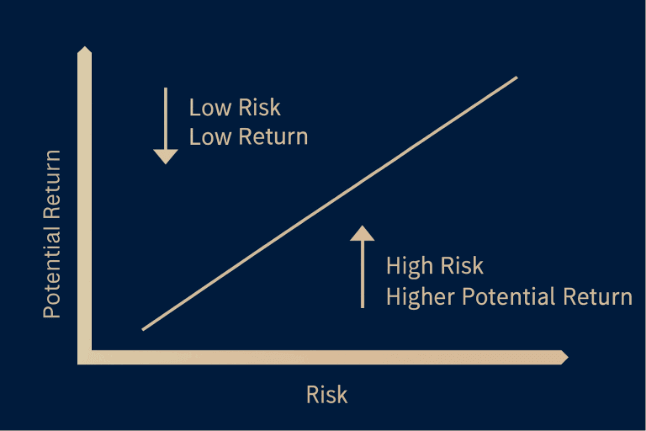
There are many types of investments, and each one plays a different role. Higher potential returns usually come with higher risk, so understanding how each option works helps you make clearer choices. Some investments focus on safety. Others focus on growth. Many people combine different types so their money can grow in more than one way. The investing sections of MoneyOpes explain these types of investments in simple terms and show how each one can support different goals.
Savings Accounts
Savings accounts offer one of the safest places to keep money. They carry very little risk, but they also provide low returns. Because interest rates stay modest, savings accounts do not support long term growth. Even so, they remain useful for short term needs and emergency funds where access and safety matter most.
Certificates of Deposit (CDs)
CDs pay a fixed interest rate for a set period, from a few months to several years. They usually offer higher interest than savings accounts, which makes them appealing when you want predictable returns. CDs are considered low risk because the interest rate and term are fixed, but they still carry some risk. They also lock funds until maturity. Therefore, if you withdraw early, you pay a penalty, so CDs work best when you know you will not need the money soon
Bonds
Bonds let you lend money to governments or companies for a number of years. In return, they pay periodic interest, called a coupon, and repay the face value at maturity. You can sell bonds before they mature, but their prices rise and fall with market conditions. Risk depends on the issuer. Government bonds tend to be steadier, while some company bonds carry more risk. Bonds generally offer more stable returns than shares or property, but they are not risk free.
Shares (Stocks)
Shares give you a small ownership stake in a company. Their value can rise or fall, and some companies pay dividends. Shares carry more risk than bonds or cash investments. Yet, they also offer the chance for higher long term growth. Because prices can move sharply, shares suit investors who want growth and understand that returns are not guaranteed. You can learn more about how shares work in our Shares section.
Funds
Funds invest in a mix of assets such as shares, property, cash, and bonds. As a result, they help you spread risk and invest even if you do not want to choose individual investments.
- An ETF is an investment fund that trades on stock exchanges. It pools money from many investors and invests in a mix of assets such as shares, bonds, or short term instruments. Each ETF share represents part ownership of the fund’s portfolio. Investors buy and sell ETF shares at market prices throughout the trading day. ETFs work like mutual funds in how they invest, but they trade like shares. [1]
- Mutual funds do not trade on exchanges. They are priced once a day at the end of the trading session and offer a managed approach to diversification.
Property and REITs
Property includes residential, commercial, and industrial real estate. These investments can generate rental income and may grow in value over time. In addition, you can invest through Real Estate Investment Trusts (REITs). REITs own property, pay regular distributions from rental income, and trade on stock exchanges. This structure makes property investment easier to access and simpler to buy or sell.
Alternatives
Alternatives fall outside the standard asset classes of cash, bonds, shares, and property. They behave differently from traditional investments and can add variety, but they often carry more complexity and risk.
- Commodities, such as gold, can help spread risk because their prices move differently from shares or bonds.
- Derivatives and options derive their value from another asset, such as a share or index. They are complex and often used by professionals to manage risk or speculate.
- Currencies can be traded online, but currency trading carries high risk, especially when borrowed money is involved.
Each type of investment has its own purpose. As your understanding of investing basics and concepts grows, you can explore how these options fit your goals, your timeframe, and your comfort with risk.
Key Investing Basics and Concepts to Know
A few core ideas help you understand how investing works. These concepts explain why investments rise and fall, how returns build over time, and why different goals need different approaches. As you learn them, investing becomes easier to follow and easier to compare across different investment types.
Risk
Risk shows how much an investment can rise or fall in value. Every investment carries some level of risk, but the amount varies. Some move only a little. Others move a lot. Therefore, understanding risk helps you decide how much movement you can accept and how it fits your goals.
Return
Return is what you gain or lose from an investment. It includes income and changes in value. Higher potential returns usually come with higher risk. Seeing this link helps you compare different investment options with more clarity.
Time Horizon
Your time horizon shows how long you plan to invest. Shorter horizons often need investments with smaller price swings because you may need the money soon. Longer horizons can allow more ups and downs because you have more time to recover from changes. Therefore, your time horizon guides many of your choices.
Diversification
Diversification spreads your money across different investments. This reduces the impact of any single loss. When one investment falls, another may rise or stay steady. As a result, diversification helps smooth out returns over time and reduces the effect of market swings.
Asset Allocation
Asset allocation shows how you divide your money across shares, bonds, cash, property, and other assets. Each asset behaves differently. Some offer growth. Others offer stability. Therfore, choosing the right mix helps you balance risk and return based on your goals and time horizon.
Valuation
Valuation helps you understand whether an investment looks cheap, fair, or expensive. Investors compare the price of an asset with its earnings, assets, or future potential. Investing fundamentals, such as knowing the basics of valuation helps you see why prices change and how investors judge opportunities. You can explore these ideas further in our guide on how to value a stock.
These ideas form the base of investing knowledge. As you move further, you will see how they connect to broader market behaviour. You will explore these ideas in more detail later in the Market Concepts subcategory, which covers diversification, asset allocation, market cycles, risk versus return, and valuation basics.
With these investing basics and concepts in place, you can approach different investment types with more confidence and a clearer sense of how they fit your goals.
Bringing It All Together
Investing basics and concepts give you a clear foundation for understanding how different investments work. You now know how saving differs from investing, how goals shape your choices, and how common investment types behave over time. These ideas help you compare options with more confidence as you explore shares, bonds, funds, property, and other assets.
As you move further, you can learn more about market behaviour, diversification, and asset allocation in our investing guides. You can also use our calculators and downloadable tools to explore numbers in a simple, structured way. These resources support your learning as you build a broader understanding of investing fundamentals.
Frequently Asked Questions on Investing Basics
Investing basics and concepts explain how money can grow through income, capital gains, or both. They also cover saving vs investing, the common types of investments, and how goals shape your choices. These ideas give you a clear starting point for understanding how investing works.
Saving means putting money aside in places that carry very little risk such as savings accounts or CDs. Growth stays limited, but your money remains secure. Investing uses those savings to buy assets such as shares, bonds, or property. These assets carry more risk but can offer higher returns over time.
Common types of investments include savings accounts, CDs, bonds, shares, funds, property, and alternatives such as commodities or currencies. Each type has its own level of risk and potential return.
Investment goals guide your choices. Some people invest to build wealth, while others aim for financial independence. Financial independence happens when returns from your investments cover everyday expenses. At that point, your money works for you instead of relying on a job.
References and Further Reading
[1] US Securities and Exchange Commission. “Exchange-Traded Fund (ETF)”
[2] Consumer Financial Protection Bureau. “Difference Between a Loan Interest Rate and the APR”
[3] Consumer Affairs. “Interest Rates and How They Work”
[4] Consumer Financial Protection Bureau. “Difference Between a Mortgage Interest Rate and an APR”
Recent Articles on Investing
-
Investing in Stocks: A Beginner’s Guide to How Stocks Work
Investing in stocks is a common way to grow wealth over time. When you buy shares, you own part of a company and take part in its…
-
How a USD Decline Could Affect US Stocks and International Markets
The value of the United States dollar influences trade, earnings, and global investment flows. A weaker US dollar can help some companies and challenge others. Yet currency…
-
Ways to Value a Stock: Main Approaches, Value Investing, and a Coca‑Cola Case Study
Valuing a stock starts with a simple idea. You want to understand what a company may be worth based on the information you have today. Investors use…
-
Investor Personality Test: Find Your Investing Style
Take this Investor personality test to discover your investing style in two minutes. This single tool also works as an investment profile quiz and an investing personality…
-
Bottom -Up and Top-Down Approaches to Picking Stocks
Introduction Investors use different ways to study the stock market. Many beginners explore investment analysis strategies to understand how companies and sectors behave over time. These approaches…
-
Wide Moat Companies. How They Win Over Time and How to Spot Them
Wide moat companies often hold strong positions that last. This guide explains why they win over time and how you can spot them through simple research, using…
-
Choosing a Stock Broker: Find One That Fits Your Investing Style
Choosing a stock broker is an important step in your investing journey. The right broker gives you access to the investments you want and the tools you…
-
How to Start Investing in Easy Steps
How to start investing in easy steps begins with making your money work for you. This beginner investing guide shows how to set goals, manage risk, and…
Try Some of Our Online Calculators
-
Rule of 72 Calculator: Estimate How Long to Double Your Money
Use this Rule of 72 calculator to quickly estimate how long it takes to double money at a given interest rate per year. You can also work out the annual rate needed to…
-
CD Calculator: Estimate Your Certificate of Deposit Returns
Use this CD calculator to estimate how much interest can be earned over time. This certificate of deposit calculator lets you enter your deposit amount, interest rate, and term length to see potential…
Free Investing Tools and Resources You Can Download
-
Business Loan Affordability Calculator for Commercial and Industrial Property
This business loan affordability calculator is an Excel template that helps users test DSCR, compare repayments, and estimate how much commercial or industrial property debt a business may support. Simple inputs, clear outputs,…
-
Ratio Analysis Spreadsheet
A simple Excel spreadsheet that helps you calculate and understand key business financial ratios. Ideal for business owners and early‑stage investors who want a clear view of liquidity, profitability, and efficiency.
Other Online Calculators and Free Tools You Can Download
Use the buttons below to explore more calculators or downloadable options.
Disclaimer – Educational Use Only
Content on MoneyOpes.com is for informational and educational purposes only. It does not constitute financial, legal, or professional advice. Your financial situation is unique, and outcomes may differ. Past performance is not a guarantee of future results. MoneyOpes.com adheres to strict editorial integrity standards, and to the best of our knowledge, all content is accurate as of the date posted. See our full disclaimer.