
Estimated reading time: 10 minutes
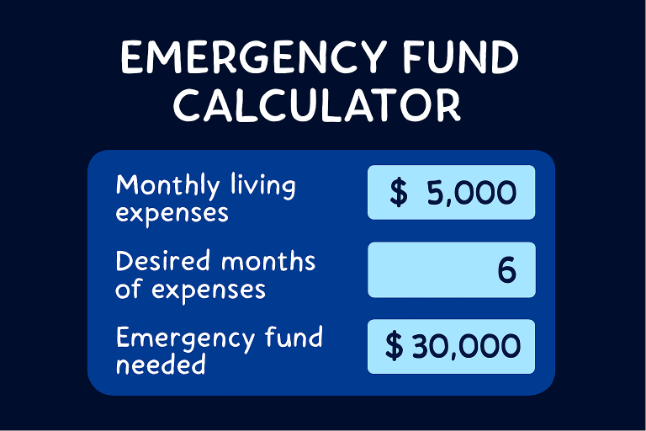
An emergency fund gives you a simple way to prepare for unexpected costs. For exapmle, medical emergencies, car and house repairs or job loss. It helps you cover essential expenses and protects you from an emergency setting you back. If the cost turns into debt, it can also have a lasting impact on your financial plans. A common target is to save around six months of essential expenses, to provide a comfortable buffer. However, it can take time to reach that level, and even a small start can make a real difference. The emergency fund calculator included on this page shows you how much you may want to set aside based on your monthly spending. Therefore, getting a handle on the question, ‘how much should my emergency fund be?’. You can adjust the inputs and see different results as you plan at your own pace.
Emergency Fund Calculator
Note: This is an estimate. Your needs may vary based on your situation and comfort level.
Quick Navigation
What Is an Emergency Fund
A simple definition
An emergency fund is a pool of money that you set aside for unexpected costs. As a result, it gives you a buffer when life changes without warning. These savings help you manage unplanned bills that fall outside your regular monthly spending. Therefore, when you have money ready, you can deal with a surprise expense and stay on track with your long term plans. Our emergency fund calculator above helps estimate how much to put aside.
What counts as an emergency
Unexpected costs can appear in many ways. Such as, a car may need repairs. A home appliance may stop working. A medical bill may arrive when you least expect it. Income may also change suddenly. These situations often require quick action, and an emergency fund gives you options when they happen.
What does not count as an emergency
Not every expense is an emergency. For example, routine spending, planned purchases, and everyday wants usually fall outside this category. In other words, these costs are part of normal budgeting. An emergency fund is designed for events that are sudden, essential, and difficult to avoid. Therfore, clear boundaries help you use your savings with confidence and protect them for moments that truly matter.
How Much Should Your Emergency Fund Be
A common starting point
A simple way to begin is to save three to six months of essential expenses. This range gives many people a clear guide when they ask how much should my emergency fund be. However, your ideal emergency fund amount may be higher if you support dependents, have income that changes from month to month, or live in an area with higher costs. As a result, these factors can make unexpected events more difficult to manage, so a larger buffer may feel more comfortable.
Why the right amount varies
Your situation shapes the answer to how much your emergency fund should be. Think about the unexpected costs you have faced in the past and how much they added up to. This reflection can help you choose an emergency fund amount that feels realistic. In addition, it also helps you understand the types of expenses that may appear again. Therefore, because every household is different, your emergency savings target may not match someone else’s.
Why some savings are better than none
Saving can feel difficult when money is tight or income changes often. Even so, starting small can make a real difference. First, one month of expenses is a helpful step. Next, you can then build your emergency savings at your own pace. Then, windfalls, such as a bonus or a tax refund, can also help you grow your emergency fund amount faster. Therefore, every contribution strengthens your ability to manage a surprise cost and stay focused on your long term plans.
How to Build an Emergency Fund

First, set a clear goal for your emergency savings. The Emergency Fund Calculator above helps you estimate a recommended emergency fund amount based on your essential expenses. Then, once you know your target, you can break it into smaller monthly goals. This approach keeps the process manageable and helps you build steady habits. In addition, automatic transfers make saving easier. As a result, when money moves from checking to savings on a regular schedule, you grow your fund without needing to think about it each time. Furthermore, you can also add to your savings when you receive a bonus, a refund, or any other one time payment.
It also helps to track your progress and adjust your plan as life changes. Specifically, some months may allow you to save more, while others may require a slower pace. Both are normal. If you want help planning your contributions, the Savings Goal Calculator can guide you. It shows how much you may need to save, how long it could take, and how growth can support your goal. Therefore, with steady habits and a flexible plan, your emergency fund can grow in a way that fits your situation.
Where to Keep Your Emergency Fund
Choosing the right place for your emergency fund helps you balance safety, access, and steady growth. Therefore, your emergency fund should be easy to access when you truly need it but separate enough that you are not tempted to use it for everyday spending.
Many people begin with a savings account in a bank. Generally considered one of the safest places to put your money, which is important when you rely on your emergency savings during a sudden event. A money market account is another option. It often offers a slightly higher return while still giving you quick access to your funds. In addition, some people also use short term CDs when they want a bit more growth and can leave the money untouched for a set period. Each option works in a different way, so it helps to choose the one that fits your comfort level and your need for access.
As your emergency fund amount grows, it can help to keep it in a dedicated account. As a result, this separation makes it easier to track your progress and reduces the chance of dipping into it for routine costs. Moreover, you can review your choices from time to time and adjust if your situation changes. Finally, the goal is to keep your emergency savings safe, available, and ready to support you when an unexpected event appears.
When to Use Your Emergency Fund
Knowing when to use your emergency fund helps you protect your savings for moments that truly matter. Simply put, an emergency is usually an unexpected and essential expense. For example, it may be a major home repair, a medical bill that was not covered, or a sudden change in income. These events can create financial pressure, and your emergency savings are designed to help you manage them. However, if you can plan for a cost without hardship, it may not qualify as an emergency. Therefore, in that case, it often helps to set a separate goal and save for it over time. Clear guidelines make it easier to stay consistent and avoid using your emergency fund amount for everyday spending.
When you do use your fund, try to rebuild it as soon as your budget allows. As a result, this keeps you prepared for the next unexpected event and reduces the chance of relying on credit or loans that may grow with interest and fees. Do not hesitate to use your emergency savings when you truly need them. That is their purpose. Once the expense is covered, you can return to your savings routine and strengthen your fund again. Over time, these habits make it easier to stay ready for financial surprises and stay focused on your long term plans.
Conclusion

An emergency fund gives you a simple way to prepare for life’s unexpected moments. Simply put, it helps you cover essential costs, avoid high interest debt, and stay focused on your long term plans. However, as your situation changes, your emergency fund amount may also need to change. A new home, a new baby, or rising living costs can all increase your monthly essential expenses. Because of this, it helps to review your fund from time to time and adjust the emergency fund amount as needed.
You can use the Emergency Fund Calculator to update your numbers whenever your spending shifts. Therefore, you enter your revised expenses and see how much you may want to set aside. Finally, with regular check ins and steady habits, your emergency savings can stay strong and ready to support you when you need it most.
FAQ Emergency Fund Calculator and Guide
A common starting point is three to six months of essential expenses. Therefore, as your life changes, your emergency fund amount may need to grow. You can use the Emergency Fund Calculator to estimate how much emergency savings you may want to set aside.
Your emergency fund should grow as your monthly spending grows. For example, a new home, a new baby, or rising living costs can all increase the amount you need. When your expenses shift, update your numbers in the Emergency Fund Calculator to see how much emergency savings you may now need.
Most people keep their emergency savings in a savings account or a money market account. These are generally considered one of the safest places to put your money and are easy to access. In addition, they also keep your emergency fund separate from everyday spending, which helps you avoid using it for routine costs.
Use your emergency fund for unexpected and essential expenses. For example, a major repair or a medical bill that was not covered. On the other hand, if you can plan for a cost without hardship, save for it separately. After you use your fund, rebuild it as soon as your budget allows so you stay prepared for the next unexpected event.
First, set a clear goal for your target emergency fund amount breaking it into smaller monthly targets. Then, create a system that helps you save consistently, such as automatic transfers. In addition, you can use the Savings Goal Calculator to plan your contributions and track your progress over time.
Recent Guides and Articles on Financial Concepts
-
Insurance Basics: How Insurance Protects You
Insurance helps protect you from the financial impact of unexpected events. It works through a simple idea. You enter into a contract with an insurance company, and…
-
What Is a Credit Score
A credit score is a number that shows how likely you are to repay borrowed money. [1] It usually falls between 300 and 850. Lenders use this…
-
APR and APY: What They Mean and Why They Matter
Understanding the difference between APR vs APY helps you compare borrowing and saving choices with confidence. These two terms look similar at first. Even so, they measure…
-
What is Interest
Interest affects many everyday money choices. Many people still want a clear explanation of what is interest and why it matters. The definition of interest is simple.…
-
What is Inflation
Inflation measures how much more expensive a set of goods and services has become over a certain period. The International Monetary Fund explains inflation as the change…
Try Some of Our Online Calculators
-
Savings Goal Calculator
The Savings Goal Calculator helps you plan how much to save to reach your target. Enter your goal amount, timeframe, starting balance and growth rate. The calculator shows the contributions you need, the…
-
Regular Savings Calculator
Use our regular savings calculator to see how your money can grow. This compound interest savings calculator shows your final balance, your total contributions, and the interest earned. Enter your savings amount, how…
Latest Free Tools You Can Download
-
Business Loan Affordability Calculator for Commercial and Industrial Property
This business loan affordability calculator is an Excel template that helps users test DSCR, compare repayments,…
-
Ratio Analysis Spreadsheet
A simple Excel spreadsheet that helps you calculate and understand key business financial ratios. Ideal for…
Disclaimer – Educational Use Only
Content on MoneyOpes.com is for informational and educational purposes only. It does not constitute financial, legal, or professional advice. Your financial situation is unique, and outcomes may differ. Past performance is not a guarantee of future results. MoneyOpes.com adheres to strict editorial integrity standards, and to the best of our knowledge, all content is accurate as of the date posted. See our full disclaimer.